Montreal
Guantanamo DiaryMontreal was Mohamedou Ould Slahi’s temporary home for less than two months, but it became the place where a search for work and a settled life intersected with the first security interrogation he remembered experiencing. He arrived in November 1999 after failing to secure permanent residency in Germany, and left for Dakar on January 21, 2000. In the narrative, that departure marks the threshold between an unsettled civilian life and the long detention journey that followed.
Arrival and a provisional home
Slahi applied for landed immigrant status in Canada in 1998 after a college friend recommended it. He moved to Montreal in November 1999, having spent most of the 1990s living and working in Duisburg, Germany, where he had completed a degree in electrical engineering. The move followed difficulty obtaining permanent residency in Germany; it was an attempt to establish himself elsewhere, not a departure from a settled Canadian life.
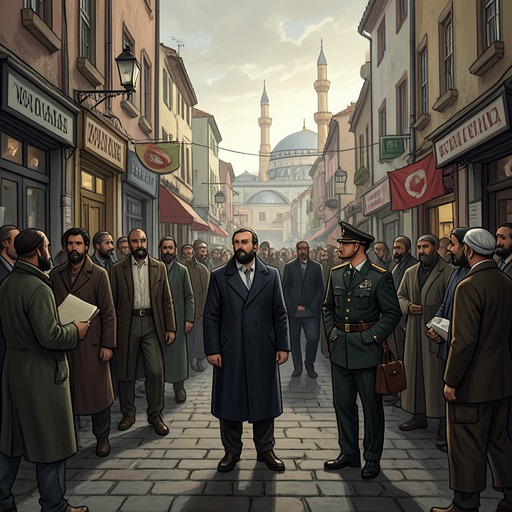
In Montreal, he stayed first with a former classmate and then at the al Sunnah mosque. His place there was not only that of a resident. As a hafiz—a person who had memorized the Quran—he was asked to lead Ramadan prayers when the imam was away. The mosque offered a religious and communal setting in the city, while also placing Slahi in a community that would soon receive concentrated attention from Canadian investigators.
The mosque and the Ressam investigation
Less than a month after Slahi arrived, Ahmed Ressam was arrested while entering the United States with explosives and a plan to bomb Los Angeles International Airport on New Year’s Day. Ressam had been based in Montreal and had attended the al Sunnah mosque, but he had left the city before Slahi arrived. Slahi’s account therefore distinguishes their timelines: the two men were connected to the same city and mosque, but the evidence presented does not place them together there.
Ressam’s arrest prompted a major investigation of Montreal’s Muslim immigrant community, with particular scrutiny of the al Sunnah mosque community. The investigation brought Slahi into contact with the Royal Canadian Mounted Police, who questioned him about whether he knew Ressam and another person. It was, by his account, the first time he had been interrogated. He said he was frightened, shaking, and intent on telling the truth and staying out of trouble. The questioning made Montreal feel different from the place where he had hoped to work and live: he described being watched as something he could not comfortably enjoy, especially when the people watching him made their presence apparent.
A name explained in retrospect
Slahi’s time in Montreal also supplied the background to an interrogator’s later questions about a name he had used there. On arrival, a friend introduced him to a roommate by his given name. Later, another acquaintance called him by a different name, and Slahi answered rather than risk seeming impolite by correcting him. He said he came to accept the name as a familiar form of address, not as an effort to mislead anyone. The shared mailbox offered a mundane counterpoint to suspicion: the person who collected his official mail could see that it bore his given name.
In the later interrogation, Slahi explained that the name meant “God’s servant” in Arabic and described how it had arisen through these introductions and everyday interactions in Montreal. He believed the Americans had tasked the Jordanians with investigating its use. The episode gives the city a second role in the book: it is not only the setting of his first questioning, but also the ordinary social context that later became material for interrogation. A nickname acquired through courtesy and familiarity was recast as a question requiring investigation.
Departure and narrative significance
Back in Mauritania, Slahi’s family worried about his situation in Canada. His mother was reported to be sick, and his former wife called on the family’s behalf, pressing him either to bring her to Canada or return to Mauritania. Slahi said he disliked the life he had found in Montreal: he could not enjoy his freedom while feeling watched, and the work was difficult. He left on Friday, January 21, 2000, flying from Montreal to Brussels and then continuing to Dakar. In his own account, he said he had left Canada mainly because he believed U.S. security services had turned their attention toward him; he also acknowledged that he had not been arrested there.
The departure gives Montreal a decisive narrative function without making the city itself the cause of everything that followed. It is the last point in this brief period where Slahi could choose to leave, and the beginning of what the book calls his detention odyssey. The introductory account describes the subsequent eighteen months as a journey through four countries, often involving American participation and always occurring at the behest of the United States. Montreal thus stands at the edge of the story’s transformation: a place of study, prayer, work-seeking, and family concern becomes the point from which an intended return home gives way to detention and interrogation.